
TARMAC by Hinchliffe
Machine-laid tarmac done to a proper commercial standard.
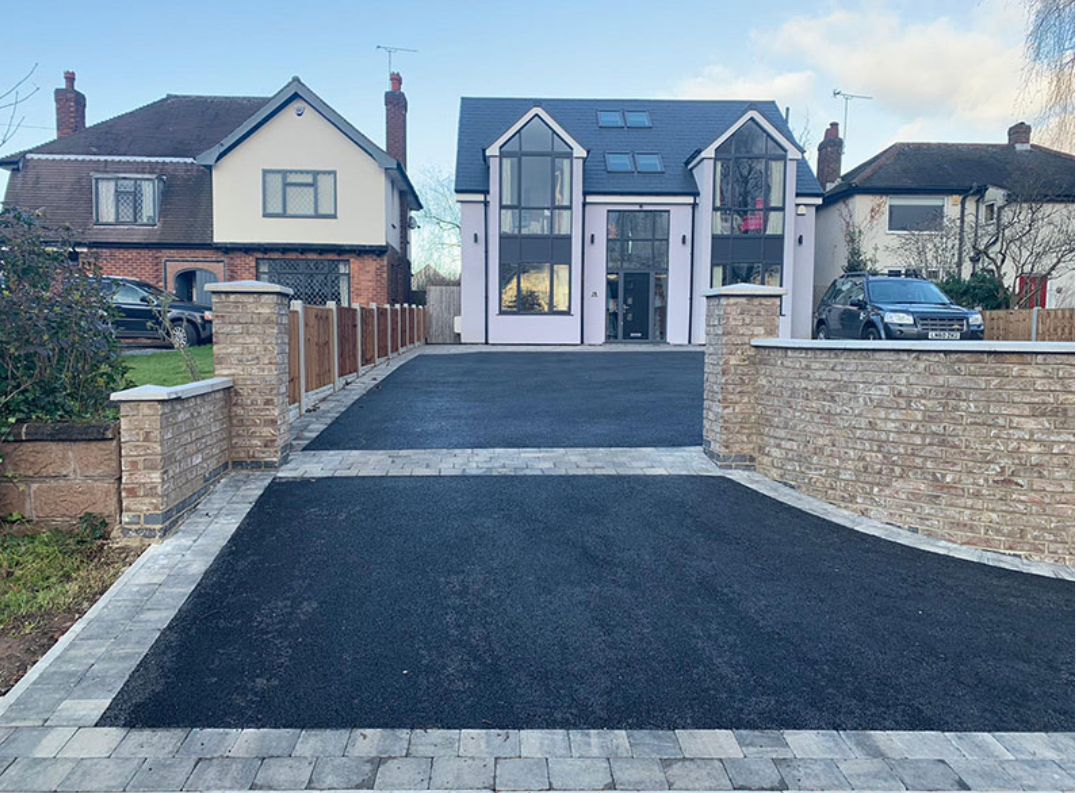
Traditional black-top surfacing for driveways, private lanes, farm yards and commercial hardstandings. We lay tarmac hot, roll it properly and cut sharp edges — no cold joints, no soft edges, no shortcuts.
Best for
- →Long driveways and shared accesses
- →Commercial hardstandings and yards
- →Cost-effective large-area surfacing
TARMAC by Hinchliffe — your questions.
How long does a tarmac driveway last?
A machine-laid tarmac driveway on a proper structural sub-base typically lasts 15–20+ years before it needs a wearing-course overlay. Hand-tamped tarmac over a weak base rarely makes it past five winters — the build-up matters more than the surface.
What's the difference between machine-laid and hand-laid tarmac?
Machine-laid tarmac is fed hot from a paver and rolled to a uniform density, giving a tight, long-lasting surface. Hand-laid tarmac cools before it's compacted, leaving loose material and weak edges. We machine-lay wherever access allows.
Can you resurface an existing tarmac driveway?
Yes — if the base is structurally sound we can overlay it with a new wearing course, saving cost versus a full excavation. If the base is cracked, sinking or holding water, an overlay just hides the problem; we'll say so honestly and price a full rebuild instead.
How soon can I drive on new tarmac?
You can walk on it once it's cooled (a few hours). Light vehicle use is fine after 24 hours. Avoid sharp turning on the spot, jacks, and prop stands for the first 2–3 weeks while it fully hardens.
Is tarmac suitable for driveways and just for roads?
Tarmac is excellent for residential driveways, private lanes, farm accesses and commercial yards. It's the most cost-effective surface for larger areas and takes heavy loads. For smaller drives where kerb appeal matters, resin or block often suits better.